Resolution #1 Get Started with Yoga
 Any time is a great time to follow your heart and try something new or make a change. From learning how to crochet to stepping into that first yoga class, for me, 2011 is about putting thought into action.
Articles pop up everyday about the positive impact of yoga on both the body and mind. But how do you transition from reading about yoga to actually getting into a class? A few of us at Go Yoga have jotted down our answers to help you out of your winter boots and onto your yoga mat.
Why should people start practicing yoga? Why should it be one of their goals or resolutions for 2011?
Lilia Mead (Go Yoga, Teacher and Founder):
Yoga is for everyone, even if everyone isn’t for Yoga. If you can breathe, have a mind and body and a deep seated desire for “ultimate happiness”, then Yoga practice and philosophy is for you. If you are investigating who you really are; beyond the body, mind complex, then Yoga is for You. If during the day you suffer from various mental afflictions and are not sure where they are coming from or how to eradicate them, then Yoga is for you. If not now, then when? Besides, why postpone joy (something I read on a bumper sticker, but true none the less).
Michael Hewett (Go Yoga, Teacher and Sarva Yoga Academy, Founder):
We’ve all heard the yoga means union or, oneness. Oneness manifests through trinities…subjects, objects, and the relationship between the two. This is the way we participate in every experience. For each of Us to own this creative experience and stabilize into a realm of abundance, safety, profundity, and love for All beings, we must glimpse this interdependent relationship through the practice and study of yoga.
Elise Espat (Go Yoga, Teacher and Ashtanga Yoga Brooklyn, Founder)
Guruji (the late Shri K. Pattabhi Jois) would say that one is drawn to yoga because they practiced in a previous life. This is from the Gita:
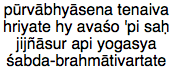
“By virtue of the divine consciousness of his previous life, he automatically becomes attracted to the yogic principles — even without seeking them. Such an inquisitive transcendentalist stands always above the ritualistic principles of the scriptures.”
If you feel a pull toward yoga, then let it begin now. Otherwise, it is always “oh tomorrow, tomorrow”. Also, in Guruji’s book, Yoga Mala, he says that winter is the best time to start yoga…
Ralph De La Rosa (Go Yoga, Manager and Meditation Teacher)
Plain and simple: Yoga is an excellent idea for anyone who enjoys feeling amazing, and is interested in struggling less in life.
If someone wants to begin practicing yoga, where should they start?
Lilia:
A good place to start is a basics class or a beginner series at a studio that grabs your heart. I would recommend researching studios and teachers at those center’s with a lot of teaching experience and practice under their belt. Also, I think it is important that the teachings come from a long, pure lineage that traces back in time. Another words; authentic and not new age or arbitrary.
Michael:
Start where your passion lies. What turns you on? Where do you get frisky when you think of your favorite things to do? Skiing, music, love making, cooking, travel, worship… it simply doesn’t matter which path you take as long as it is taken.
Elise:
If you have a friend that invited you to class, go! If you see a sign for a yoga shala, walk in, get a schedule, and sign up for a class. There are so many options out there, you are bound to try things that you decide are not for you. When this happens, grab your mat and try something new. Be persistent in establishing your practice and be ready to make a commitment and do the work when you find the right fit.
Ralph:
By taking a Basic class! It may sound obvious, but too many people start with DVDs or podcasts. The best way to learn anything is always from another person who is in the room with you. Books and whatnot are great, but only once you’ve built your foundation.
Philosophically: By contemplating how good your life already is. I’ve got friends, love, warmth, food, clothing, shelter, intelligence, and the most amazing city one could live in – that’s only the tip of the iceberg, and so many people live with so much less. I’ve got all of this, and yet time is slipping past me at an alarming speed. What do I do with my incredible privilege and good fortune? How do I make this all count? No matter what my answer is, a yoga practice is a great asset for getting me there.
What should someone look for when choosing their first teacher and how do they find them?
Lilia:
Personally, I think there are a lot of young “Yoga” instructor’s running around the city, but not a lot of people truly teaching Yoga. I want to know that my teacher’s know their Yamas and Niyamas, are meditating and practicing Guru Yoga (or at least know what it means) and are not mistaking the path or practices for the goal itself; Enlightenment, Samadhi, Nirvana, Freedom from Suffering etc. There needs to be a scriptural source for the teaching. In other words, not simply the individual’s take or spin on the practice; random spiritual thoughts of the day.
Michael:
They will turn you on and inspire like the way great musicians inspire young musicians. Being in the presence of a Being like this feels like riding a magic carpet…like the way high art raises you to a higher level. People find a Teacher by desiring to have a relationship with a Teacher, and everyone…everyone wants this kind of relationship in their life. It is as unmistakable as romantic chemistry.
Traditionally {in the Tibetan tradition} the first three qualities of a qualified Teacher is their perfect ethical behavior, their concentration to maintain this fidelity in all situations, and their stainless and unshakable wisdom which is the view that all beings are their own sweet self.
Elise:
Parampara. They should have direct and practical experience with yoga practice and teaching. They should come from a lineage of knowledge. They should inspire you. They should be a living example of the benefits of yoga.
Ralph:
Detailed instruction, and someone you simply like. Ask them questions about your practice. Ask them who else to go to. And stick with them when they start to push your buttons. You find your teachers by just practicing and trying lots of different things. This is why we try to offer so many workshops at Go. Having exposure and access to different approaches is really key.

What should someone look for when choosing a yoga studio?
Lilia:
Choosing a Yoga studio is like entering into a very intimate relationship. All the right conditions must be there. Connection to the teachings and teacher, the vibe, aesthetic, authenticity of the practice and lineage. The whole experience; from the moment you walk in until you step foot back outside. How does it all make you feel? Can you let your guard down, feel safe and vulnerable enough to sweat your prayers and be as real as you can be?
Michael:
Master Patanjali’s Astanga yoga should be taught: all eight limbs are being addressed: Harmonious conduct in life [yama/niyama], physical practices, subtle body/breath/emotional control, sensory withdrawal, and how to refine concentration into bliss.
By the way, Costa Rica is not a limb of yoga.
Elise:
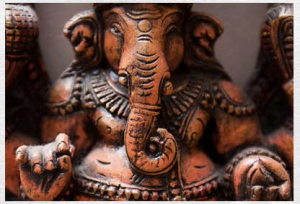
If we use the shastras as a standard, then it is very specific in terms of environment — a clean indoor space on the ground floor in a place with many trees — it goes on… For most city dwellers, find a place that makes you feel excited about going to class. It might be a church basement, a gym, or a yoga studio with Ganesh on the wall. It is also important to think about it as an investment. You might start at one place and decide another better fits your practice and ethical principles.
Ralph:
Friendliness. What are the people who teach, practice and work there like? If they are happy and attentive, then they’re doing something right; and that’s where you want to be.
How should a beginner choose what classes to attend?
Michael:
Study with teachers you have chemistry with and stick close to Them. This is a changing thing in that they will shift over the years. It will be the most magnetic way of staying in the practice over a long period of time. After all, if you can’t do what you’re teacher says, how will you ever listen to your inner voice, and how would you ever be capable of doing what you set out to do?
Elise:
Start with classes listed as appropriate for beginners or “basic”. When you are ready for more, the next step will present itself.


Ralph:
Trial and error. Don’t settle into a “comfort zone” too quickly. Every teacher has something to show you.
How should one prepare for that first class?
Michael:
Be kind in your motivation towards others as steadily as possible until it spills over into your dreamlife.
Elise:
Read the beginner section of the class website. They’ll let you know what you should bring and how to get ready. Arrive early (10-15 minutes) so you can leisurely get acquainted with the space and registration procedures. Don’t eat at least 2 hours before class.
Ralph:
Show up a little early. Quiet yourself, take a break, and set an intention or reminder. This can make or break any practice. I like to remind myself to be present and diligent; to really show up for the challenge – but also to back off and take rest when I need to. Also, it’s a great idea to break the cycle of being so self-concerned all the time. Yoga makes me a better friend, lover, family member, co-worker, teacher, student… I have so much more brilliance to offer the world when I’ve been practicing. Dedicating a practice to the betterment of the world is a clever way to taste freedom.
Any other advice for someone interested in starting a practice/those first classes?
Michael:
Basic classes three times a week for three months, at least.
Elise:
Yoga is a whole life practice that develops over an entire lifetime. Take it easy, be patient, and as my Sanskrit teacher in India says, “practice with happy”.
Ralph:
Seriously, just do it and keep doing it. The hardest part is getting started. Once you’re in the full swing of things, you will be so glad you worked past any initial reluctance. You will surprise and inspire yourself. Also, be kind. Stop giving your inner self-critic the time of day. You’re awesome and your life is nothing short of a full-blown miracle. This is about making the very most of that.
-Elise Espat
ABOUT:
In January 2000, Lilia Mead opened Go Yoga with the help and support of countless others. Her practice and classes include Vinyasa, Pranayama, Meditation, and Chanting. In 1997, she completed her Jivamukti training with her first and most profound teachers Sharon Gannon and David Life. Since then, she’s had the opportunity to study with many great masters, including T.K.V Desikachar, Mary Dunn, Genny Kapular, Geshe Michael Roach and Lama Christie McNally. She traveled to India in 1999 to study with the esteemed Sri K. Pattabhi Jois, and in 2002 returned to study with meditation master Sri Sri Ravi Shankar. In 2006, Lilia’s spiritual practice expanded to include the birth of her daughter and three years later, a son. Becoming a mother has proved to be the most challenging, yet fulfilling spiritual practice to date.
Michael Hewett has been teaching yoga and dharma full time since 1997. Reflecting his extensive training and creativity, Michael’s heat-building vinyasa classes emphasize breath, meditation and yogic philosophy. Over the past fourteen years, he has studied with Alan Finger, Cyndi Lee, David Nichtern, Sharon Gannon and David Life. In 2004, he met his root teachers, Geshe Michael Roach and Lama Christie McNally, and began studying Tibetan Buddhism in the lineage of His Holiness the Dalai Lama.
In 2010, Michael founded Sarva Yoga Academy out of a deep sense of gratitude and respect for the power of the ancient practices and teachers who’ve dedicated their lives to passing wisdom to us. Sarva Yoga Academy’s mission is to transmit the knowledge and practices of the great Indian and Tibetan yogic lineages, which teach students the difference between power and force, participation and manipulation, and how to transmute every moment of their life into spiritual practice.
Michael is also an accomplished composer, guitarist of over twenty five years, and recording artist who has released four full-length albums and numerous singles. He plays lead guitar in the hit Broadway Musical, “Wicked” and tours internationally with his own project.
Elise Espat is dedicated to the ongoing practice and study of the traditional Ashtanga yoga method. She is one of the few teachers worldwide to have received Level 2 Authorization enabling her to teach both the primary and intermediate series of Ashtanga yoga. She is honored to have practiced with the late Shri K. Pattabhi Jois and maintains an ongoing practice with R. Sharath Jois and R. Saraswathi Jois at the KPJ Ashtanga Yoga Institute in Mysore, India . She leads the Ashtanga Yoga Brooklyn Mysore program hosted by Go Yoga and teaches Led Ashtanga classes on the ongoing Go Yoga class schedule.
Ralph De La Rosa is a lifelong spiritual seeker and, more recently, a spiritual finder. Yoga and meditation have offered him the hands-down, best solutions to the depression, addiction, anxiety and trauma that weighed him down for a very, very long time. Ralph is the manager of Go Yoga, teaches meditation with The Interdependence Project (www.theidproject.org), and is studying to become a psychotherapist at Fordham University.


