- Education Displays & Vendors
- Children’s Center
. . . ever heard of Box City? - Greencycle Swap
Drop off your clean and gently used clothes, shoes, bedding, toys, and books. They'll also take your bikes & electronics (working) and computers (non-working okay). Take what you want and what's left gets "Goodwilled". - Sensitive Document Disposal
- Art, Science & Writing Contests
- Blood Drive
- Live Music & Performances
Friday, April 30, 2010
Recycle!
Sunday, May 2nd, head over to Williamsburg/Greenpoint's McCarren Park for the Go Green! Greenpoint Earth Day Festival. The event will run from 11 am - 4pm and will feature:


Tuesday, April 27, 2010
Moon Day Theory #2 {Richard Freeman}
Next Moon Day: Wednesday, April 28, 2010.
From Richard Freeman at the Yoga Workshop:
"Observing this restraint to practice can be helpful in not becoming too attached to practice and routine. It also provides time for the body to rest and recuperate."
read on
From Richard Freeman at the Yoga Workshop:
"Observing this restraint to practice can be helpful in not becoming too attached to practice and routine. It also provides time for the body to rest and recuperate."
read on
Monday, April 26, 2010

Sunday, April 25, 2010
{Schedule} Afternoon Mysore starts in May
Monday-Thursday 3:30 - 5:30 pm afternoon Mysore begins May 3rd, 2010. Beginners are welcome! Classes take place at 112 North 6th Street in Williamsburg, Brooklyn. Take the L to Bedford Avenue. Monthly tuition is $99 for new students.
More information.
More information.
Wednesday, April 21, 2010
Ashtanga Books - Essential Reading

See it at Amazon (We also carry it at AYB)
Yoga Mala : Sri K. Pattabhi Jois
Also Surya Namaskara : Sri K. Pattabhi Jois available through the KPJAYI.

See it at Amazon
We also carry a translation at AYB
The Yoga Sutras

See it at the Sri Ramakrishna Math
We also carry a translation at AYB
Bhagavad Gita : Swami Tapasyananda
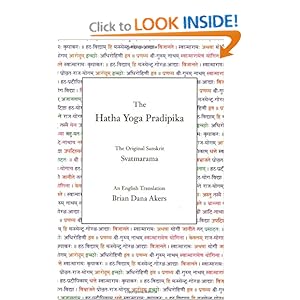 See it at amazon
Hatha Yoga Pradipika
Wednesday, April 14, 2010
{New Students} $99 Unlimited Month
New students can sign up for a month of unlimited classes for $99 (regular $180). Register in person. Click for more information.
{Event} 5/23 Ashtanga for Vinyasa Students with Elise
Ashtanga Yoga for Vinyasa Students and Teachers:
An Introduction for the Mysore-Curious
with Elise Espat at Go Yoga
Sunday, May 23rd
4pm - 6pm
As we move deeper into our understanding of yoga, we often find ourselves wondering where our practice comes from and where it might be going. We find ourselves digging a little deeper into the subtle aspects such as bandha and dristhi and possibly even entertaining the idea of learning more about and beginning an Ashtanga yoga practice.
This two-hour introductory workshop led by Ashtanga yoga practitioner Elise Espat is intended to give the vinyasa student a window into this traditional method. Anything but your typical led primary class, this will be an opportunity to learn more about the lineage as well as to dip your toes in the Mysore practice. Participants will explore the fundamental postures of the primary series (Yoga Chikitsa), delve into the tristhana (breathing/bandha, posture, dristhi), and have a taste of the history and theory behind Ashtanga yoga.
A perfect way to jump-start your Mysore practice, gather tid-bits to chew on in your vinyasa classes, or immerse yourself in the lineage for an afternoon.
All levels of experience are welcome and invited to attend.
$25 Advance / $35 Day-of
Please register at Go Yoga
Elise leads the Ashtanga Yoga Brooklyn program hosted by Go Yoga which is focuses on the traditional Mysore-style practice of Ashtanga yoga as taught in the lineage of the late Shri K. Pattabhi Jois.
Please visit the Ashtanga Yoga Brooklyn website for more information and resources. www.ashtangayogabrooklyn.com
An Introduction for the Mysore-Curious
with Elise Espat at Go Yoga
Sunday, May 23rd
4pm - 6pm
As we move deeper into our understanding of yoga, we often find ourselves wondering where our practice comes from and where it might be going. We find ourselves digging a little deeper into the subtle aspects such as bandha and dristhi and possibly even entertaining the idea of learning more about and beginning an Ashtanga yoga practice.
This two-hour introductory workshop led by Ashtanga yoga practitioner Elise Espat is intended to give the vinyasa student a window into this traditional method. Anything but your typical led primary class, this will be an opportunity to learn more about the lineage as well as to dip your toes in the Mysore practice. Participants will explore the fundamental postures of the primary series (Yoga Chikitsa), delve into the tristhana (breathing/bandha, posture, dristhi), and have a taste of the history and theory behind Ashtanga yoga.
A perfect way to jump-start your Mysore practice, gather tid-bits to chew on in your vinyasa classes, or immerse yourself in the lineage for an afternoon.
All levels of experience are welcome and invited to attend.
$25 Advance / $35 Day-of
Please register at Go Yoga
Elise leads the Ashtanga Yoga Brooklyn program hosted by Go Yoga which is focuses on the traditional Mysore-style practice of Ashtanga yoga as taught in the lineage of the late Shri K. Pattabhi Jois.
Please visit the Ashtanga Yoga Brooklyn website for more information and resources. www.ashtangayogabrooklyn.com
Tuesday, April 13, 2010
Moon Day Theory #1 {Tim Miller}

Next Moon Day: Wednesday, April 14, 2010.
From Tim Miller at the Ashtanga Yoga Center:
"Both full and new moon days are observed as yoga holidays in the Ashtanga Yoga tradition. What is the reasoning behind this?
Like all things of a watery nature (human beings are about 70% water), we are affected by the phases of the moon. The phases of the moon are determined by the moon’s relative position to the sun. Full moons occur when they are in opposition and new moons when they are in conjunction. Both sun and moon exert a gravitational pull..."
read on
{Quote} The Six Poisons
The six poisons: A vital aspect of internal purification that Pattabhi Jois teaches relates to the six poisons that surround the spiritual heart. In the yoga shastra it is said that God dwells in our heart in the form of light, but this light is covered by six poisons; kama, krodha, moha, lobha, matsarya, and mada. These are desire, anger, delusion, greed, envy and sloth. When yoga practice is sustained with great diligence and dedication over a long period of time, the heat generated from it burns away these poisons, and the light of our inner nature shines forth.
This forms the practical and philosophic basis of Ashtanga Yoga as taught by Sri K. Pattabhi Jois.
Saturday, April 10, 2010
Allergies, practice, and you
Spring is in the air and everyone is sneezing. So should you practice? The general rule for Ashtanga practitioners is to practice at home if you are sick (all those tissues are just gross plus you don't want to get anyone else sick if it is more than allergies) and to rest if you have a fever.
The use of a neti pot is recommended to lessen symptoms and here is a list of foods that might help. A neti pot tutorial below:
More tips:
The use of a neti pot is recommended to lessen symptoms and here is a list of foods that might help. A neti pot tutorial below:
More tips:
Ashtanga yoga practice, sick and you
Tuesday, April 6, 2010
Ashtanga in the movies (not just practice)
Whether you wish to be inspired or have a laugh, here's a list of some films featuring Ashtanga.
Ashtanga, NY - A Yoga Documentary
Guru - Documentary Chronicling the 90th Birthday of Yoga Guru Pattabhi Jois

Enlighten Up
Yoga Unveiled: The Evolution and Essence of a Spiritual Tradition
Yoga Inc.
ORIGINS OF YOGA: Quest for the spiritual
Ashtanga, NY - A Yoga Documentary
Guru - Documentary Chronicling the 90th Birthday of Yoga Guru Pattabhi Jois
Enlighten Up
Yoga Unveiled: The Evolution and Essence of a Spiritual Tradition
Yoga Inc.
ORIGINS OF YOGA: Quest for the spiritual
Tuesday, March 30, 2010
Yoga Mat. But which one?
One thing that I really love about Ashtanga yoga is that you really only need yourself in order to practice. Practice on a wood floor or on the grass loosens things up while practice on carpet seems to just never work out. While there are certain advantages to going "en plein air", most people are going to use a yoga mat and sometimes a rug too. It is of course more hygenic (if you keep your mat and rug clean), there is something about the bond one creates with a mat after hours and hours of urdhva mukha svanasanas, and in certain postures more padding is essential. But which mat? And why use a rug?
 The Typical
Most people (myself included) started with an inexpensive PVC yoga mat. Usually around $20, one can find these mats just about everywhere from Barnes and Noble to the local pharmacy. Slippery and stinky at first, this will dissipate over time. Usually the go-to mat for yoga studio mat rentals because of the very low price, these mats shred over time. They are often thick, but not firm (a quality that beginners often mistake for a good thing). I do not recommend purchasing a PVC yoga mat. There are many health concerns regarding PVC and it is usually not recycled. These days, with a little effort, you'll definitely be able to get your hands on an eco-friendly mat at a comparable price point. Search Gaiam for mats around $20. I haven't tried any of them, let us know!
 The Eco
The common eco mats ($40-$70) are the Jade Harmony mat and the EcoYoga Jute mat. When you first roll it out, it has a strong rubber smell, but that goes away. I found mine (Jade) to be incredibly sticky from day one. So sticky, that certain maneuvers on the mat had to be rethought on account of the non-slippage. That said, other people have told me that it was slippery for them. The Jade mat also attracts dust and hair at the beginning, so be prepared to wipe it off a lot if that kind of thing bothers you. After over two years of use, mine had yet to shred. Other people had shredding within a year. Thickness varies, medium to firm. While the non-stick and eco aspects are positive, for people learning jump throughs I definitely recommend considering a mat with a different textured surface or placing a rug on top for seated postures. Other natural mats can be found through Hugger Mugger, Prana, and Manduka. I've tried the Manduka Eko Lite. It is super light (great for travel). It has two sides: slick and sticky. Extra padding is in order for certain second series postures.
 The Classics
The Manduka Black ($90) mat is an Ashtanga classic. Slippery, thick, and firm. Ideal for Ashtanga practice, but not necessary for beginners. Does not shred. These things last forever, but to my knowledge are not eco-friendly. They are heavy and travel with them is not fun at all. David Swenson has come out with a yoga mat which appears to attempt to out-do the Manduka. I haven't tried it. Have you? Is it eco-friendly? Shraddha has also been cooking up a mat...
The Rug
I don't really know why other people use rugs, but here's why I like them.
1. Practice seems less daunting when I'm staring at a rug instead of The Mat.
2. Rugs come in many fun colors and patterns and can liven up any mat.
3. Instead of worrying about cleaning my mat all the time, I just have to wash my rug.
4. Soaks up moisture.
5. Doubles as a resting blanket.
6. Good surface for learning jump throughs.
7. Extra padding for certain postures.
8. Some say they help with slipping.
If you aren't going to India tomorrow, you can find a Mysore rug at many Ashtanga shalas, studios, and online. Many people also use "mat towels". I prefer rugs.
How/where to get a mat
- Online (new-stores, new/used-craigslist)
- At a yoga studio (new/used)
- Health food stores (new)
-Through Ashtanga Yoga Brooklyn or our Amazon store
What to do with an old mat
Tips from Elephantbeans
Tips from Gaiam
What do you practice on?
The TypicalMost people (myself included) started with an inexpensive PVC yoga mat. Usually around $20, one can find these mats just about everywhere from Barnes and Noble to the local pharmacy. Slippery and stinky at first, this will dissipate over time. Usually the go-to mat for yoga studio mat rentals because of the very low price, these mats shred over time. They are often thick, but not firm (a quality that beginners often mistake for a good thing). I do not recommend purchasing a PVC yoga mat. There are many health concerns regarding PVC and it is usually not recycled. These days, with a little effort, you'll definitely be able to get your hands on an eco-friendly mat at a comparable price point. Search Gaiam for mats around $20. I haven't tried any of them, let us know!
The EcoThe common eco mats ($40-$70) are the Jade Harmony mat and the EcoYoga Jute mat. When you first roll it out, it has a strong rubber smell, but that goes away. I found mine (Jade) to be incredibly sticky from day one. So sticky, that certain maneuvers on the mat had to be rethought on account of the non-slippage. That said, other people have told me that it was slippery for them. The Jade mat also attracts dust and hair at the beginning, so be prepared to wipe it off a lot if that kind of thing bothers you. After over two years of use, mine had yet to shred. Other people had shredding within a year. Thickness varies, medium to firm. While the non-stick and eco aspects are positive, for people learning jump throughs I definitely recommend considering a mat with a different textured surface or placing a rug on top for seated postures. Other natural mats can be found through Hugger Mugger, Prana, and Manduka. I've tried the Manduka Eko Lite. It is super light (great for travel). It has two sides: slick and sticky. Extra padding is in order for certain second series postures.
The ClassicsThe Manduka Black ($90) mat is an Ashtanga classic. Slippery, thick, and firm. Ideal for Ashtanga practice, but not necessary for beginners. Does not shred. These things last forever, but to my knowledge are not eco-friendly. They are heavy and travel with them is not fun at all. David Swenson has come out with a yoga mat which appears to attempt to out-do the Manduka. I haven't tried it. Have you? Is it eco-friendly? Shraddha has also been cooking up a mat...
The Rug
I don't really know why other people use rugs, but here's why I like them.
1. Practice seems less daunting when I'm staring at a rug instead of The Mat.
2. Rugs come in many fun colors and patterns and can liven up any mat.
3. Instead of worrying about cleaning my mat all the time, I just have to wash my rug.
4. Soaks up moisture.
5. Doubles as a resting blanket.
6. Good surface for learning jump throughs.
7. Extra padding for certain postures.
8. Some say they help with slipping.
If you aren't going to India tomorrow, you can find a Mysore rug at many Ashtanga shalas, studios, and online. Many people also use "mat towels". I prefer rugs.
How/where to get a mat
- Online (new-stores, new/used-craigslist)
- At a yoga studio (new/used)
- Health food stores (new)
-Through Ashtanga Yoga Brooklyn or our Amazon store
What to do with an old mat
Tips from Elephantbeans
Tips from Gaiam
What do you practice on?
Monday, March 29, 2010
Beginner's Guide

You're Ashtanga curious. Here are some tips on how to get started and what you can expect.
- Observe a Mysore class before beginning practice for the first time.
- Commit to at least one month of practice.
- You do not have to know the primary series or anything about yoga to join a Mysore class. Although you will be practicing to your own breath, your Mysore practice will be highly supervised by the instructor. You will be taught individually one posture at a time. Your first classes will be short and will eventually be around 90 minutes. Slowly as these postures integrate, more postures will be added by your teacher and you'll continue to refine previous postures and techniques.
- All ages, shapes, body types, genders, ethnicities, etc. are welcome to attend. You don't have to be strong or flexible or a dancer or a gymnast. The only requirement is an enthusiasm for practice.
- The Mysore-style of learning and practicing is different than most other types of yoga practice because:
-it is made of set series of postures which you practice daily
-you develop a practice over time
-the student-teacher relationship is very important
-students practice with one teacher
-it is less about catering to what we are accustomed to and more about challenging ourselves to transform
-Students can take their time, work at their own pace, and are encouraged to marinate in certain postures if there is a therapeutic indication - There are six series of postures in the Ashtanga yoga system. Primary series is called yoga chikitsa which means yoga therapy. This practice tones, increases flexibility, and detoxes the body and mind. Everyone starts their Mysore practice by gradually learning and practicing the primary series.
- You can arrive to practice any time that is convenient for you within the designated practice times as long as you are finished before the end. For example, if your practice is 35 minutes long, you should begin before 8:55am if class ends at 9:30am. So, no, your practice isn't 3 hours long and you do not have to arrive at the beginning of the Mysore class.
- Bring a clean towel, a yoga mat, wear clean clothes, take a shower, be barefoot, and arrive on an empty stomach. Do not drink water or other liquids during practice.
- Ashtanga yoga is a daily practice. Really, if we are talking the full spectrum of practice, it is 24/7. In terms of being on a mat, students practice 6 days per week. Saturdays or Sundays are a day of rest as are the first three days of the menstrual cycle (called ladies' holiday). Moon days (full or new moon) are also a day of rest. If this isn't possible for you at first, do what you can.
Also see:
David Robson interview video on what to expect in a Mysore class
how to pick a yoga mat
essential ashtanga reading
2011 Moon Days
Sunday, March 28, 2010
{Food} Savory Breakfast

Carrot-Tahini Spread with Avocado and Toast
2 pieces of toast
2 grated carrots
6 tablespoons tahini
splash of wheat-free tamari sauce
juice of 1 lemon
1/2 of a ripe and ready avocado, sliced
Blend carrots, tahini, and lemon juice. If more runny than peanut butter, taste and add more carrots and/or tahini (depending on the flavor you like). If very thick and dry, add more lemon juice. Add a splash of wheat-free tamari. Taste. Test consistency (peanut-butter like).
Squeeze a little of the remaining lemon juice over the sliced avocado.
Serve carrot-tahini spread with avocado and toast. I like to pile it on my toast as I eat, but maybe you want to pre-stack the goods. It is up to you!
Enjoy!
I try to stay clear of prepared/processed foods, but for gluten-free bread I usually buy Food For Life Millet Bread.
Saturday, March 27, 2010
{Class} Led Ashtanga Primary Series & Community Class starts 3/27/10 in Bushwick

Led primary series of Ashtanga yoga
with Elise Espat
Mondays and Wednesdays 12-1:30pm at the Green Fitness Studio, L to Morgan Ave
$5 suggested donation
Saturdays 1-2:30pm
Thursday, March 25, 2010
{Event} Ashtanga Yoga with Mary Flinn 4/25/10

Ashtanga Yoga Practice and Theory
with Authorized Ashtanga Teacher Mary Flinn
Sunday, April 25, 2010
12:15-2:30 pm
Led primary series of Ashtanga yoga followed by a discussion on practice and tasty eats. All levels are welcome and encouraged to attend. Be sure to sign up early as space is limited.
Learn more and sign up
This event will take place in Brooklyn, NY.
Wednesday, March 24, 2010
Tuesday, March 23, 2010
The Mission
What we are trying in all these discussions and talks here is to see if we cannot radically bring about a transformation of the mind.
Not accept things as there are but to understand it, to go into it, to examine it.
Give your heart and your mind with everything that you have to find out a way of living differently.
But that depends on you and not somebody else.
Because in this there is no teacher, no pupil, there is no leader. There is no guru. There is no master, no savior.
You yourself are the teacher and the pupil. You are the master. You are the guru. You are the leader.
You are everything.
And to understand is to transform what is.
J. Krishnamurti

Subscribe to:
Comments (Atom)